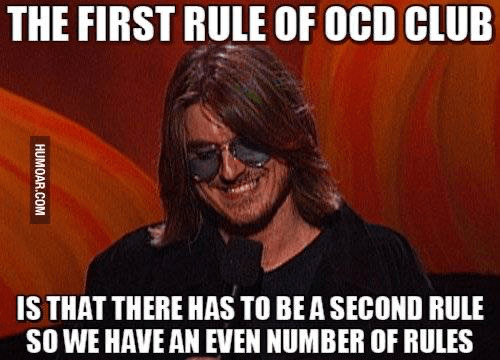
If you have a pulse, you have experienced anxiety at some point in your lifetime. Anxiety takes many forms and manifests in different ways for different people. During the season of this pandemic and civil unrest most of our general anxiety levels have ticked up. As I have noticed the impact of this global anxiety, I have also been reflecting on how I got started on my journey towards being a psychotherapist. My own journey started with a unique flavor of internal unrest, OCD.
A Little More Than Teenage Angst
In my mid-teens, I thought I was quite literally losing touch with reality and felt like I was unable to control my own mind and body. I considered myself crazy and felt helpless and hopeless. I was experiencing crippling anxiety, which turned into a deep depression, which in turn made me more anxious. Some days, I swear I could feel and smell my brain synapses frying.
What I was experiencing felt so embarrassing, I didn’t want to acknowledge it with anyone. I got to a breaking point and my parents helped me identify a need to see a professional. I would soon come to discover that I have Obsessive Compulsive Disorder (OCD), and I was so relieved to find out that there was a name for the cluster of symptoms and behaviors I was experiencing. Hilariously enough, during our stupid high school days with everyone claiming to be “so OCD,” and some how sound like valley girls even though I grew up in Massachusetts, it didn’t occur to me for one moment that I may have legitimately have this disorder. I was messy, disorganized, averagely hygienic, and barely noticed imperfections in the world around me.
My OCD Diagnosis
I learned that my particular subset of OCD surrounds checking. Basically this means that I don’t have the benefit of cleanliness, order, or even whimsical magical thinking. I just have the benefit of REALLY knowing if I locked the door or turned off the lights. It is the bullshit of OCD subsets. I am just anxious with no productive benefit to name.
What if I didn’t lock the car or the lights are still on? I definitely did not close the fridge. What if I said something really offensive to my best friend. Let me make sure I packed my school bag for the zillionth time. I know I definitely offended someone, and my house is going to burn down because I left the stove on. Thankfully I also left the kitchen sink running so they will even out. But what if the heat from the house burning down and the cold water running mixes and causes a barometric depression and there is a fucking hurricane where my house used to be? This is why I can’t have nice things.
I knew the obsessive intrusive thoughts were not realistic, making things all the more maddening. It’s like my body was being possessed by Obsessia, the patron saint of making sure that everything that is fine, is in fact fine, and she is not a very forgiving saint. My therapist assured me that I wasn’t being possessed, but rather I was experiencing compulsions. “An action or behavior that you engage in, in an attempt to find relief of….” Yeah, yeah, yeah..whatever, lady. I know you are just in cahoots with Obsessia. Through some mindfulness based CBT treatment and handy dandy Zoloft, I was well on my way to recovery.
Survivor Model
With OCD, and any mental illness for that matter, there is definitely some controversy on using a recovery model when thinking of treatment versus managing a chronic illness. Weirdly enough, the longer I have worked in this field, the more useless I find diagnosis criteria because the reality is mental illness is a part of mental health. It is all on a health spectrum.
When someone is stabilized from a deep depression, I don’t consider them to be a recovered majorly depressed person. Much like I don’t find myself to have recovered from OCD, I still have it. Sometimes it flares worse than other days, but overall it is much better managed. I am surviving with OCD. Like with most mental health issues, nights tend to be harder and I have my series of checks that I do, but I am okay with it right now. It doesn’t feel as dark as it once was.
Get Connected
Treatment for OCD can be very painful. I know. I have been there. While it isn’t necessary to find a therapist who also has OCD to treat you, there can be some wonderful benefits when it comes to the normalization of such a stigmatized diagnosis. Also, the way that your therapist can relate to the particular type of anxiety, which can be so hard to articulate, can be really helpful. I remember how influential it was for me to meet the psychiatrist I had that prescribed my Zoloft. He told me about his battles with OCD going through medical school and provided me with so much hope. The first thing he advised was that I don’t need to feel like I will have to rely on medication, or hardline CBT, or exposure therapy for the rest of my life. It gets better. I can regain mastery over my mind and body again.
I am here to also let anyone suffering from OCD know that too. This is a highly treatable part of your health, but it takes a lot of work. If you are suffering from OCD, and live in Virginia, please don’t hesitate to reach out to me. If you are a therapist treating someone with OCD and are seeking peer consultation, I would also be equally happy to make time for you as I can! Stay tuned for additional posts I have on OCD where I will be tackling more specific nuances.
Most of us have experienced some form of grief in our lifetime. We know what it feels like and might even be able to describe some of the nuances of it. Many of us may feel lost when it comes to what “to do,” about grief. There comes in grief counseling.
Grief is everywhere. It happens every time you experience the loss of something or someone important or that provides safety to you. This includes the death of someone (bereavement). It is the feeling of sadness, emptiness and loss that accompanies these life events. So, what really is grief and what do we do about it? I’ve had many great teachers in grief throughout my life, but none have been more important than some of the people I have served. Here are some of the gems that I cherish and reflect on as I recently lost such a teacher.
Keep the light on
Traditions are so important to the grieving process. There can be great value in continuing to keep up this loving practice even well after that person is gone. This may come in the form of continuing to have conversations with that person, continuing to make space at the table, continue singing to them in the mornings, or continuing to keep the light on in their room. While you may wonder if this is trying to “hold on,” to someone or not allowing for “real grief,” consider:
Grief theory used to assume that we needed to detach from a person. Since the Freudian age, we have learned that true growth and integration after a loss means continuing a healthy attachment with that person after they are gone. This allows us to continue holding them in our heart and allowing them to shape us in some way as we continue to live life. We don’t have to deny that relationship.
Create space and change place
The pendulum of creating space for grief and also changing up your “place,” are worthwhile endeavors to find balance in. Perhaps this looks like keeping up a small area in your house of memorabilia of the loved entity you have lost and tending to it almost like you would your garden. A garden is even a symbolic way that some people I have worked with have tending to their grief. Again, having a dedicated space to continue practicing that tending to in the relationship can be vital.
You might also feel the need to balance this act of creating space with, perhaps, turning your dining room table 90 degrees up against the wall so that it eliminates the empty seat at the table and allows you to take a step forward into your new life, without having to always feel the empty seat. Not all avoidance of feelings are bad.
A Willingness to feel
It takes a lot of strength and courage to open up and be willing to experience the pain of grief. This is usually the only way to remain open to the loved one’s connection and love, too. The willingness to open up to sadness, anger, anxiety and even relief or joy, can teach us a lot about ourselves. More importantly, the willingness to allow these emotions teaches us self-compassion and kindness. Many of the people that I have provided grief counseling to, often have an experience of pain due to yearning for their lost one and not feeling like they are able to connect with them or feel their presence in any way.
I usually address this through the ongoing willingness to feel as they may have unknowingly have been guarding against the full experience of the loss, and thus not allowing the full experience of a new connection. This was beautifully articulated to me in the following metaphorical gem by a recently deceased client of mine. She was expressing her own feelings of grief for a friend she had lost, and was feeling very ambivalent about reaching out to her friend’s family during her birthday because of the feelings that might accompany the call.
Grief is like a heavy winter trench coat
She described what she was feeling as a coat that was weighing her down and restricting her movement. As we discussed her experience, we discovered that grief feels like you wear this coat all the time. Every time you try and take it off, it has a funny way of finding itself right back on you. We are tempted to try and shed it any chance that we can get so that we can move about life a little easier. It is constrictive, unpleasant to the touch, and horrid to look at. So what would happen if we were willing to drop the struggle and get to know what wearing this coat feels like and explore it?
We might find that there is also something that would be lost if we were able to fully remove that coat. Maybe if we were to check the many pockets, there would be significant artifacts or items that we wouldn’t want to lose within that coat of grief. Those pockets had to be explored to name the treasures inside. As my client continued to develop her willingness to wear this coat, she discovered an avenue to dedicate something to her deceased friend and felt a conviction to act on this by sending flowers in her honor to their church.
The Waves of Grief are all a part of the same ocean
Our ocean of grief is made up of loss of control and loss of predictability. It has the salty sting of pain that crashes on us in waves. It feels like a free fall where we try and reach out to someone or something to help catch us. Unfortunately, this is the initial trauma we all face when we are born. The inability to express the pain of not understanding, and needing safety provided to us. We carry the need to find safety, predictability and control in life. When we suffer a loss along the way, it adds a ripple to the ocean, a wave, or sometimes even a tidal wave. To live with grief, means we find a way to surf these waves and recognize how our many griefs are connected. This is, after all, the human condition. If you love, you will lose.
Not all grieving processes require therapy. However, if you find you’re struggling to manage your experience or feel you’re losing yourself in the waves, please consider reaching out. You don’t have to go through this process alone. Individual and group therapy can be very effective and healing.
Medical social workers are a rough and tumble talented crew of people. We learn a majority of our skills on the job, but have a backbone of knowledge in caring for others in different capacities. Below are some reasons why going to a social worker with medical experience is an added bonus.
Medical Social Workers are fearless.
This is not me tooting my own horn, this is just a necessary way of being in medicine. In medicine, you see some sh*t on a daily basis. You meet with people sometimes at their absolute worst and most stripped down. I’ve seen so many things I can’t unsee and been witness to, both extraordinarily heartening moments, and also the most traumatic things that life has to offer. I can guarantee you, I will not be shocked by anything you say, but I can absolutely meet you in that moment and rise to any occasion because that is what I have been trained for. We will bear those wounds together.
Medications and conditions, yup we know those.
Don’t worry, you can just tell me what medications you might be prescribed, and what conditions you have been diagnosed with. I can take it from there. Yes, I know what Guillain-Barré syndrome is. I also know about the standard of care for someone with advanced stage prostate cancer. Goals of care conversations and recovery planning? Yup, second nature here. While there is a lot about medicine I don’t know (I am not a physician), I am fluent in medicalese.
Medical social workers can help with long term care planning.
I have had countless conversations with families about how to best set up care for a loved one. There is a lot that goes into these conversations and one has to know what someone will need throughout the course of their life. It is also important that one understands their community resources as well. And that brings me to our next perk!
Medical social workers have community knowledge.
I know my way around my community resources. If I can’t provide it for you, I know who can. If I don’t know, I will make it my business to know. I have made many connections in the central Virginia community and provided countless referrals for many community resources.
We’re trained in crisis intervention.
I am trained to be cool and collected with any crisis and will confidently take the lead when you are looking to get grounded and get the rug back under you. I have experiences with individuals, couples and family crises as these are all demanded in the medical setting. Crisis response ranges from responding to support family during a code page to assessing suicidality of a patient. I have had plenty of experience with the full range.
We can help you talk with your family.
I can help you speak with family about difficult topics. I’ve spent the past 4 years assisting cancer patients and families with very challenging conversations. I can partner with you in discussing a new diagnosis with family, planning for end of life or long-term care, or communicating to family what you need when you are feeling emotionally depleted.
We also can provide caregiver support.
If you are caregiving for a loved one and are feeling the burden of that stress, I have plenty of experience working with people placed in that role. You are often having to pick up chores and roles that are unfamiliar and feeling those senses of loss. Determining how to best care for yourself in this role is challenging and quite often benefits from having an outside party to help affirm you and hold you accountable to your own self-care.
We speak grief and loss.
Grief and loss doesn’t just mean distress from losing a loved one. There are many other griefs and losses that we all face, and I speak those languages and can help frame this experience in a normalizing and validating way.
Pathology and Validation
I have seen the best medicine has to offer, and also the dirty underbelly of how medicine is practiced. Because of these experiences, I am not quick to frame symptoms as pathology, but if we do talk diagnoses, I discuss this with intention to help provide psychoeducation or validation of your experience.
In short, don’t underestimate the value of working with a therapist who has a medical background. These skills translate fundamentally well into the therapeutic space and can be a boon for you and your family. Remember to shop around for the therapist that best fits your needs and personality. More than anything, it is most important to find someone who feels right for you.
Instant Message (IM) therapy or teletherapy has been around for years through platforms like BetterHelp and TalkSpace. As a student in the early 2010s, I was pretty skeptical of anything outside of in person therapy. I wondered how you could get a true therapeutic experience at a distance. Teletherapy, however, has been shown to be effective and is able to provide access to healthcare to folks who may not have many options. Here’s some other reading you can do on the subject: “14 Benefits of Teletherapy for Clients” “Does Online Therapy Actually Work?“.
Effective communication is effective communication, regardless of the setting
– Keith Grafman
If you thought teletherapy is just something reserved for a younger crowd, I want to share some of what I have learned offering these sessions through BetterHelp.
You get insight into someone’s brain..with their consent!
With BetterHelp, the client has the option to toggle on or off “live text”. This allows them to show what they type as they go. Think about all those times you write something and go back and delete before you send it or save it. Imagine the usefulness of seeing someone’s train of thought in action while doing that? Seeing this is a therapeutic jackpot that can help with processing what’s “left unsaid”. I give a disclaimer ahead of sessions to let people know of this capability. Not doing so would be very intrusive if formal consent is not given.
There is time for thoughtful replies.
Like with email, you have more time to allow yourself to write a thoughtful reply than phone or video sessions. This allows for more time choosing language, direction, and flow of therapy. As a client, you can also get into your therapist’s head when you see them typing as well. Yes, it works both ways! I know this feature has made me feel more humble in my communications as my clients see me wrestling with words, train of thought, and typos.
Therapeutic pacing feels easier to manage.
As with any texting, it is easier to see both parties are participating and how much. As a therapist, this helps with gauging how much “coaching,” you are engaging in, or psychoeducation. We can more intentionally choose to balance our stage time with this overt awareness, and perhaps illicit more client interaction with Socratic questions for our client’s to explore.
Emojis can help clarify tone and emotion, and even add to the therapeutic process.
Emojis definitely help out with trying to express the emotional content of what is communicated. I also find them necessary so that both parties can feel like they are on the same emotional wavelength. I was actually quite surprised with how much personality and humor can come through on this platform. Because I like using a lot of metaphors and analogies in my work, emojis have been great to use as symbols throughout sessions. I have found using emojis in some instances help communicate a point better than verbal or nonverbal communication could. For example, maybe a turtle emoji (🐢) symbolizes a client’s frequent Automatic Negative Thought. It serves as a representation of themself as being slow. Using that emoji in future sessions can be rewarding and shed humor and light onto their internal world.
Privacy
IM sessions probably provide the most privacy during these pandemic times where we are most on top of each other in our homes. The discretion of the IM platform is a huge perk. It is quiet, looks like a texting window, and is easy to engage in while multitasking.
Less pressure
There is definitely something to be said about the “informality” of IM therapy. I have noticed that it tends to take some of the unhelpful pressure that both parties may place on themselves going into sessions to reach a breakthrough or perform in a certain way. This allows for an easier way to build trust and rapport as both parties feel like they can be more themselves. Having said that, this does not mean this is “therapy lite,” or a way to slack off on therapeutic work. My final point brings the accountability portion of this therapy modality into light.
Extra effort needs to be put in to attune to one another
The additional need to ensure we are in lockstep with our clients, due to missing nonverbal communications, gives us enough fuel to lock in,and make sure our communications are heard in the way we intended them. I have noticed this phenomena from the client end too. I have greatly appreciated how there is more back and forth about what is said to make sure that we are hearing each other correctly. In some ways, I feel like my IM sessions have had the most reliability with how both parties are interpreting each other’s communication for this reason.
IM therapy does have limitations that shouldn’t be discredited. This is definitely not a platform that fits everyone, but I would caution letting the concept of it undermine its legitimacy.
Having said that, I have been pleasantly surprised that I have been able to engage clients in experiential practices, and behavioral practices that I once thought would be a very limited process through chat. If you have been contemplating trying Teletherapy or the IM function, go on give it a try. Accessibility and healing await you.